
Railcar to Container Loading: A Smarter Way to Handle Dry Bulk in North America

The Hidden Cost of Labor-Intensive Transloading
Across the United States and Canada, logistics providers and bulk operators are under increasing pressure to move materials more efficiently while keeping labor costs under control. This is especially true when it comes to transporting dry bulk goods across the ocean in shipping containers.
In many operations, the process is still built around FIBC (or Big Bags) handling. Materials such as plastic pellets, soda ash, kaolin, grains, or powders are discharged from railcars, stored temporarily, filled into big bags, moved by forklifts, and then loaded into containers. While widely used, this approach introduces multiple handling steps, requires significant manpower, and creates unnecessary complexity. It also increases the risk of dust exposure and contamination, particularly for sensitive or hazardous materials.
What appears to be a standard process often turns out to be one of the most inefficient parts of the entire logistics chain.
A Direct Approach to Railcar-to-Container Loading
An increasing number of logistics providers are now shifting toward a more direct solution: loading bulk material straight from railcars into shipping containers.
With Siloadmaxx, the process is reduced to its essentials. The system connects to the railcar, a liner bag is installed inside a standard ISO container, and after connecting the linerbag to Siloadmaxx’ telescopic pipe the loading process begins. Instead of multiple intermediate steps, the material flows directly into the container in a controlled, closed system. Under typical conditions, a full container can be loaded in around one hour, with minimal operator involvement.
This streamlined approach removes complexity from the operation and turns transloading into a predictable, efficient process.
Handling Different Railcar Types with One System
Rail infrastructure across North America is far from standardized, and any practical solution must be able to handle this variability. Siloadmaxx is designed with this reality in mind.
For pressurized railcars, the system can connect directly and utilize the existing pressure within the railcar to convey the material into the container. This creates a particularly efficient setup with minimal additional equipment.
In the more common case of non-pressurized railcars, a pull-push system is used. Material is extracted via vacuum and then conveyed onward using positive pressure through the Siloadmaxx into the container. This combination ensures reliable and controlled handling, regardless of the railcar configuration.
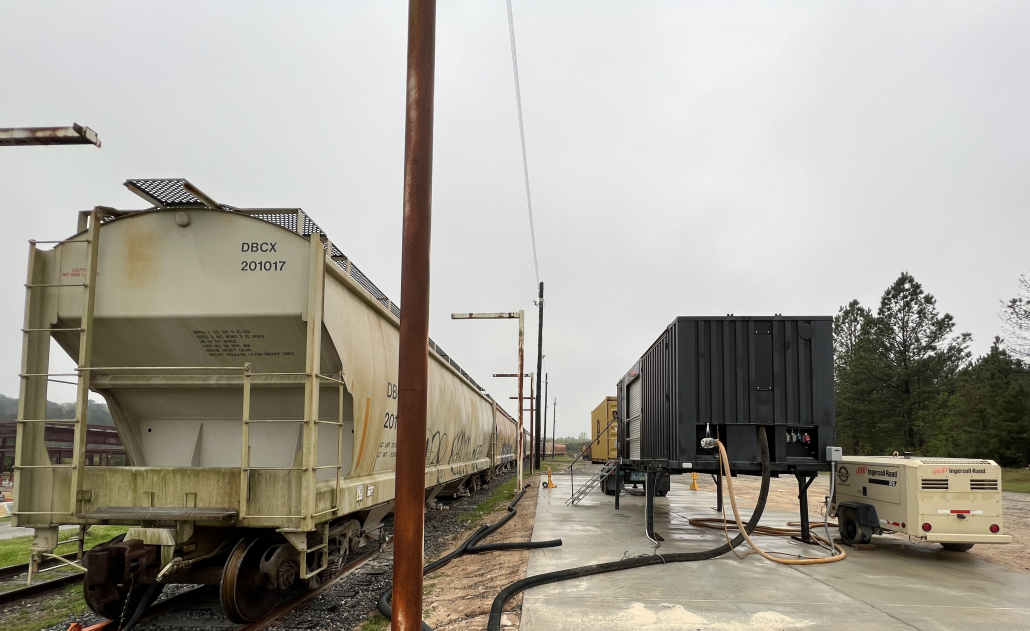
Setup of Siloadmaxx Unit in the US next to a railcar
Precision Loading with a Telescopic Pipe System
One of the defining technical features of Siloadmaxx is its telescopic loading pipe, which plays a crucial role in both efficiency and transport safety.
The liner bag inside the container is connected directly to the front end of the loading pipe. At the start of the process, the pipe extends towards the front end of the container, allowing material to build up at the front first. As loading progresses, the pipe gradually retracts, ensuring that the container is filled evenly from front to back.
This controlled filling process results in a uniform distribution of material inside the container. The benefit is not only operational but also logistical: evenly loaded containers are far better suited for handling in ports, where cranes rely on balanced weight distribution. On top of that, the material is less prone to particle destruction as the bulk material is gently conveyed into a heap of its own.
Maximizing Payload and Eliminating Lost Volume
The advantages of controlled loading become even more apparent when working with low-density materials such as silica or certain powders.
A 40-foot high cube container offers more than 70 cubic meters of volume, but traditional FIBC-based loading methods rarely utilize this capacity efficiently. The space between individual bags effectively becomes unusable, reducing the total payload per container and increasing the number of shipments required.
By contrast, direct loading with a liner bag allows the container to be filled almost entirely. The absence of air gaps translates directly into higher payload efficiency. For operators, this can mean fewer containers for the same volume of product, which has a measurable impact on transportation costs.
In many cases, the savings in logistics alone justify the transition away from FIBC handling.

Siloadmaxx can receive material from various systems like silos or railcars
Reducing Labor While Improving Safety
Beyond efficiency, one of the most immediate benefits of direct loading is the reduction in labor intensity. Traditional workflows depend heavily on manual handling and continuous forklift operation, both of which add cost and introduce safety risks.
Siloadmaxx eliminates these steps by removing the need for intermediate bagging altogether. The material remains within a closed system from railcar to container, significantly reducing operator exposure to dust and minimizing the risk of contamination or moisture ingress. This is particularly important when handling fine powders or materials with explosive properties, where safety standards are especially stringent.
The result is a cleaner, safer working environment combined with a much simpler operational setup.
Built for Global Container Logistics
The system is designed to integrate seamlessly into existing logistics networks. It supports all common container formats, including 20-foot, 40-foot, and high cube containers, and works with liner bags to ensure clean and secure transport.
This enables companies to ship bulk materials using standard container infrastructure, opening access to global markets without relying on specialized bulk shipping solutions. For many operators, this flexibility is becoming increasingly valuable in a changing logistics landscape.
A Flexible Solution for Modern Operations
Every site has its own requirements, and flexibility is essential. Siloadmaxx can be deployed as a fixed installation or used as a mobile unit, depending on operational needs. Systems are available for purchase or lease, and are commissioned and supported by experienced technicians who also provide on-site operator training.
This ensures that customers not only receive the equipment, but also the expertise needed to integrate it effectively into their processes.
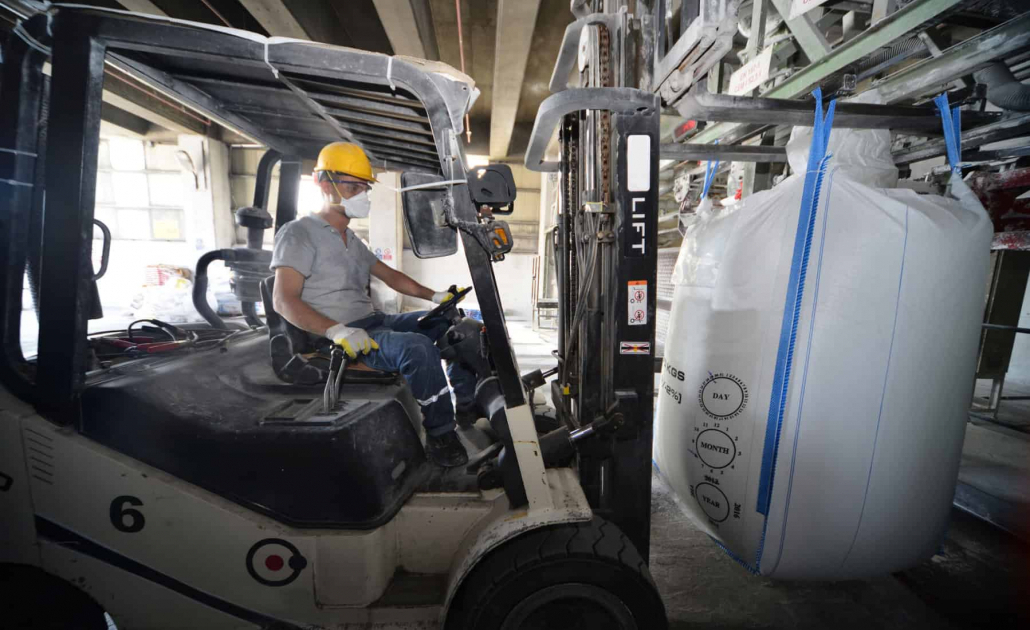
Reduce dusty and inefficient bulk handling
Why Logistics Providers Are Driving Adoption
In North America, the shift toward direct railcar-to-container loading is being led primarily by logistics providers. They are the ones facing daily pressure to improve efficiency, reduce labor costs, and maintain high safety standards while keeping operations flexible.
For them, simplifying transloading is not just an operational improvement—it is a strategic advantage. By reducing handling steps and maximizing container utilization, they can offer faster, more cost-effective services to their customers.
As labor costs continue to rise and efficiency becomes a key differentiator, traditional FIBC-based workflows are increasingly difficult to justify. Direct loading solutions provide a clear alternative by combining operational simplicity with measurable cost savings.
Siloadmaxx represents a shift toward a more streamlined, controlled, and efficient way of moving dry bulk materials from rail to container.
Take the Next Step
If your operation still relies on manual bagging, forklift handling, or complex transloading setups, it may be time to consider a more efficient approach.
Get in touch with us to learn how Siloadmaxx can help you reduce labor intensity, improve safety, and make full use of every container you ship.
